Absorbing Other Peoples Emotions Until They Feel Yours
Published: 4 Aug 2026
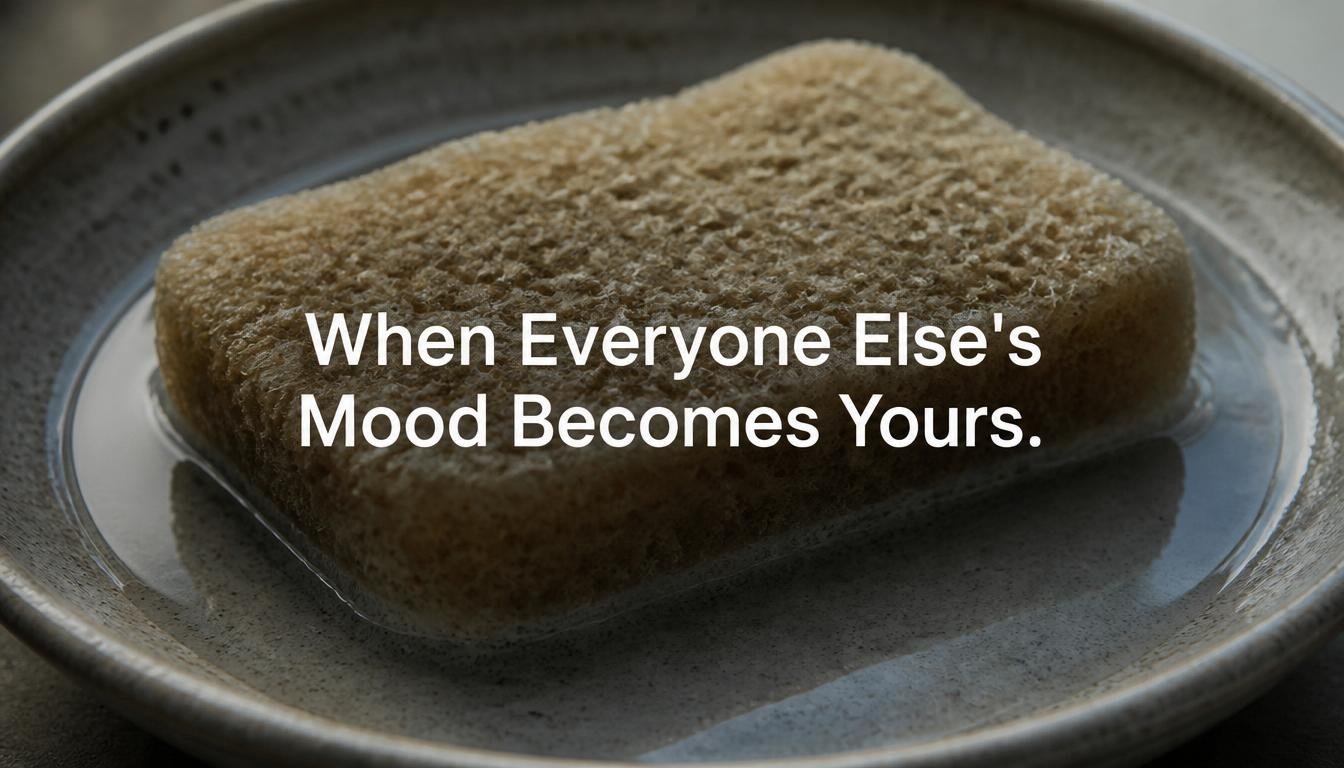
Absorbing other people’s emotions is when someone else’s mood starts to feel like it’s living inside your own body. Even without them saying a word. It often comes from a mix of high sensitivity and years spent reading people closely. Sometimes for safety. Sometimes out of care. Left unmanaged, it can leave you exhausted in ways that are hard to explain to anyone who doesn’t feel it the same way.
If you’ve ever walked into a room in a fine mood and walked out flat or anxious, this pattern is likely at play. Even with no clear reason why. It isn’t a flaw in your character. It’s closer to a skill that’s grown a little too strong, without much of a filter attached to it.
Emotional Sponge Versus Just Being Empathetic
The phrase emotional sponge gets used casually. But it describes something specific. It means soaking up the emotional atmosphere around you so thoroughly that other people’s feelings start to register as your own. With barely a line between the two.
This is different from ordinary empathy. Empathy means understanding and caring about what someone else feels. This pattern goes a step further. The feeling itself transfers over and starts affecting your own mood and energy, often within minutes of being near someone.
A useful check is noticing how fast your mood shifts around certain people. And how long that shift lingers after you’ve left. If a tense coworker’s stress clings to you all afternoon, that’s a strong sign this pattern applies to you.
Why Others’ Moods Affect You So Much
A few things tend to combine to create this pattern. High sensitivity to sensory and emotional input is often part of it. Your nervous system simply registers more input from your surroundings than average, emotional tone included.
Early life plays a role too. Growing up closely watching a parent’s mood, often to stay safe or keep the peace, tends to build this skill early and strongly. That early training doesn’t just disappear once the original need for it is gone. It often keeps running quietly in the background for years.
Physical closeness adds another layer. Your brain has cells that fire when you observe someone else’s emotional state, almost rehearsing it internally. In most people, this remains a mild background hum. In people who absorb emotions strongly, that hum can feel closer to a full transfer.
What Absorbing Other People’s Emotions Looks Like Day to Day
This pattern tends to show up in specific, repeatable ways once you start watching for it. Sitting near someone anxious and noticing your own chest tighten within minutes is common. So is leaving a family gathering feeling completely drained, even if nothing dramatic happened.
Picture this. A friend calls you upset about something in their own life. You listen, offer support, and the call ends. An hour later, you notice a heavy, unsettled feeling that doesn’t quite match your own day. That residue is often borrowed, not yours.
Social media can trigger a version of this, too. Scrolling through other people’s stress or grief can leave you weighed down, even though none of it touched your actual life. The mechanism is the same. Something outside you slipped inside without much of a filter.
Empathy Fatigue and Why It Builds So Fast
Empathy fatigue is the exhaustion that builds from absorbing other people’s emotional states repeatedly. Often faster and more intense than ordinary tiredness. It tends to build quietly, since every single moment of absorbing someone’s mood can feel small and manageable on its own.
The trouble is the total effect. A day spent absorbing a tense meeting, a friend’s bad news, and a stranger’s frustration on the train can leave you just as drained. Even though nothing you did looked tiring from the outside. That mismatch is a hallmark sign of this specific kind of fatigue.
Left unaddressed over months or years, this pattern can push some people to withdraw from relationships altogether. Simply to protect their own energy. That withdrawal often isn’t necessary once the pattern is understood and given some real structure to work with.

What Emotional Boundaries Actually Mean Here
Emotional boundaries, in this context, aren’t about caring less or becoming distant. They’re about holding a clear internal line between what belongs to someone else and what belongs to you. Even while you stay genuinely present and caring toward them.
A practical boundary might sound like this internally: “I can hear how hard this is for you. And I can support you without needing to carry the feeling myself.” That’s a mental stance more than a spoken sentence. It takes practice to hold on in the moment, especially with people you’re closest to.
Physical boundaries help too, even simple ones. Taking a short break between an emotionally heavy talk and whatever comes next gives your system a chance to settle. Without that gap, feelings can stack faster than you can process any of them.
How to Stop Absorbing Others’ Emotions
Try this the next time you notice someone else’s mood settling into your body. It works best done quickly, right as you notice the shift starting.
- Pause and ask yourself directly: “Is this feeling actually mine?”
- If the answer is no or unclear, name whose feeling it likely is.
- Take three slow breaths, imagining the feeling settling back toward its source.
- Do one small physical action, like washing your hands or stepping outside.
- Check back in with your own mood a few minutes later to see if it’s shifted.
This won’t work perfectly every time, especially with people you’re close to. Over repeated practice, though, most people find the gap between “their feeling” and “my feeling” gets easier to notice and hold.
When This Pattern Gets Mistaken for Something Else
People who spend years absorbing other people’s emotions are sometimes labeled moody or hard to read. When what’s actually happening is closer to carrying an invisible extra load most of the day. That mislabeling can be its own quiet source of frustration.
It also gets confused with anxiety, since the physical feelings often overlap. A tight chest, racing thoughts, restlessness. The difference is usually in the trigger. Anxiety tends to stick around no matter who’s near you. This kind of absorbed feeling often fades once you’ve had distance from that person for a while.
Noticing that the fade pattern is one of the clearer signs that you’re picking up something external. Feeling worse near certain people and better once removed from them points to something borrowed. Not something you generated entirely on your own.
Practical Distance Without Guilt
Creating distance from someone else’s emotional state doesn’t mean stepping back from the relationship. You can stay close to someone while still protecting your own inner experience from getting fully absorbed by theirs.
A few small shifts help here. Listening from a slightly more grounded place, reminding yourself silently that you can care without merging, tends to work better than trying to listen “less.” Scheduling recovery time after a heavy talk, even just twenty quiet minutes, also helps stop one hard conversation from bleeding into the rest of your day.
None of this makes you a less caring person. If anything, it tends to make you more steady over time, since you’re no longer running on emotional reserves that were never really yours to spend.
High Sensitivity as a Real, Researched Trait
High sensitivity is a recognized personality trait. Sometimes called sensory processing sensitivity in research. It describes a nervous system that processes more input, both sensory and emotional, than average. That includes everything from noticing subtle sounds to picking up unspoken tension in a room.
This trait isn’t a disorder or a flaw. Research suggests it shows up in a meaningful share of the population, roughly fifteen to twenty percent by some estimates. It comes with real strengths too, including deep empathy, strong intuition, and a rich inner life.
Understanding that this is a genuine, researched trait can shift how you relate to it. It’s not something to fix. It’s something to build better structure and boundaries around.
Key Takeaways
- Absorbing other people’s emotions goes beyond ordinary empathy, where their feelings start registering as your own.
- High sensitivity and early experience monitoring others’ moods often combine to create this pattern.
- Empath fatigue builds from the total weight of repeatedly absorbing emotional states, often invisibly.
- Emotional boundaries mean holding a clear line between what’s yours and what isn’t, without becoming distant.
- High sensitivity is a real, researched trait, not a flaw or something in need of fixing.
Carrying This Forward
If you’ve spent years feeling everyone else’s emotional weather as your own, that pattern likely developed for real reasons. Whether through sensitivity, early experience, or both together. There isn’t anything wrong with you to fix.
What tends to help most is building a clearer line between what belongs to you and what you’re simply picking up nearby. Along with small, repeatable habits that mark the difference in the moment. That line gets easier to hold with practice, even if it never becomes fully automatic.
Try the short pause, practice the next time someone else’s mood starts to settle into your body. That single question, asking whether the feeling is actually yours, is often the first crack in an old pattern. One that’s been running on autopilot for a long time.
Frequently Asked Questions
You might be if other people’s moods consistently affect your own state. Especially if that shift lingers after you’ve left their presence. A quick way to check is to notice how often you feel drained or shifted after being around certain people, without a clear reason from your own day. This pattern is common and isn’t a flaw, though it often benefits from stronger boundaries.
This usually comes from a mix of high sensitivity to emotional input, along with early experience closely watching someone else’s mood. Often for safety or connection. Mirror neurons, which activate when observing others’ emotional states, can also play a role in how strongly this transfer feels. None of these causes point to something being wrong with you.
Emotional boundaries are an internal line between what belongs to someone else and what belongs to you. Held even while you stay caring and present. They aren’t about becoming distant. Practicing them often involves a mental stance, along with small physical actions that mark a clear transition after a heavy talk.
A useful first step is pausing to ask whether a feeling is actually yours, the moment you notice it settling in. Following that with a few slow breaths and a small physical action, like stepping outside, can help mark a clear boundary. This tends to improve with consistent practice, rather than becoming perfect right away.
Yes. High sensitivity is a recognized personality trait, sometimes called sensory processing sensitivity, describing a nervous system that processes more input than average. It shows up in a meaningful share of the population and comes with real strengths, including deep empathy and strong intuition. It is not considered a disorder.






- Be Respectful
- Stay Relevant
- Stay Positive
- True Feedback
- Encourage Discussion
- Avoid Spamming
- No Fake News
- Don't Copy-Paste
- No Personal Attacks
- Be Respectful
- Stay Relevant
- Stay Positive
- True Feedback
- Encourage Discussion
- Avoid Spamming
- No Fake News
- Don't Copy-Paste
- No Personal Attacks
