How Stress Affects the Body Long Before You Notice
Published: 29 Aug 2026
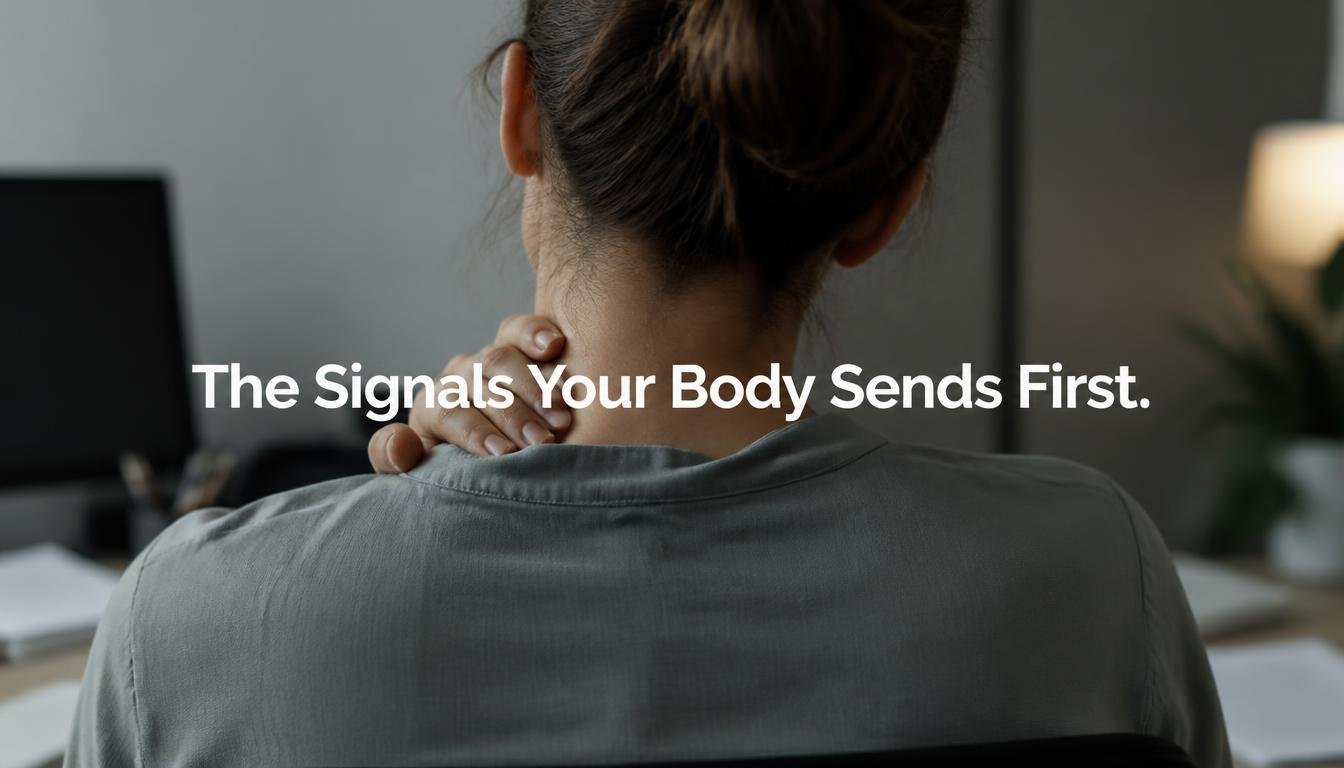
How stress affects the body starts long before any clear symptom shows up. Your system releases stress hormones, tightens muscles, and shifts digestion within seconds of a stressful trigger. Most of this happens quietly. Well before you consciously feel stressed at all. By the time you notice tension or tiredness, your body has often been running this pattern for hours, or even days.
If you’ve ever felt worn down for no clear reason, this quiet process is often why. Stress doesn’t wait for permission. It moves fast, through nearly every system in your body at once.
The Body’s First Response to Stress
Within seconds of a stressful moment, your brain sets off a chain reaction. Your amygdala flags a threat. Your hypothalamus sends a signal. Your adrenal glands release a rush of hormones, mainly adrenaline and cortisol, into your blood.
This response happens before conscious thought even catches up. Your heart rate climbs. Your breathing quickens. Blood shifts toward your muscles, away from digestion, getting your body ready to act fast if needed.
None of this requires a real emergency to trigger. A tense email, a harsh comment, or a looming deadline can all set off the same chain. Your body doesn’t wait to judge how serious the threat actually is.
Chronic Stress Symptoms You Might Be Missing
Chronic stress symptoms often show up quietly. In ways that don’t immediately look stress related. Trouble falling asleep, even when tired. Frequent headaches with no clear cause. Digestive issues that come and go without explanation.
Some symptoms are even easier to miss. A short temper over small things. Getting sick more often than usual. A general sense of being tired, no matter how much rest you get. These signs tend to build slowly. That makes them easy to write off as unrelated, or just part of a busy life.
Seeing these symptoms as connected to stress, rather than as separate issues, is often the first real step toward fixing the actual cause.
Cortisol Effects Across Nearly Every System
Cortisol effects reach far beyond the immediate stress response. This hormone shapes blood sugar, immune function, memory, and even how fat gets stored in the body. In short bursts, cortisol is genuinely useful. It sharpens focus and gets the body ready for action.
The trouble starts when cortisol stays high for too long. High cortisol can weaken immune function, making illness more likely. It can disrupt sleep, even after the original stress has passed. It can also hurt memory and focus, since high cortisol affects brain areas tied to learning.
This is why long term stress rarely stays contained to just “feeling stressed.” Cortisol touches too many systems for the effects to stay small for long.
Physical Effects of Stress on Digestion
Physical effects of stress show up clearly in the digestive system. Often faster than in almost any other part of the body. Stress pulls blood flow away from digestion. Your body treats digestion as less urgent than a threat.
This can cause stomach discomfort, nausea, or a loss of appetite during a stressful moment. Over the longer term, chronic stress can worsen conditions like irritable bowel syndrome. It can also disrupt gut bacteria in ways that affect digestion well past the stressful period itself.
The gut and brain stay in close, constant contact, through a pathway often called the gut-brain axis. This is part of why emotional stress so often shows up as a very physical stomach problem.

How Stress Affects the Body’s Immune Response
How stress affects the body’s ability to fight illness is one of the clearest effects, and one of the easiest to actually measure. Short term stress can briefly boost immune function. Part of the body’s natural prep for possible injury.
Chronic stress works the opposite way. Sustained high cortisol weakens immune activity over time. It makes the body slower to fight infections. It also slows healing after injuries. This is part of why people under long term stress tend to catch colds more often. And tend to recover more slowly when they do get sick.
This link is well documented in research. Not just guesswork. Studies on caregivers and people under long work stress consistently show weaker immune markers, compared to less stressed groups.
What Chronic Stress Does to the Body Over Time
Chronic stress causes damage that builds up slowly. Not all at once. Blood vessels can stay slightly narrowed for longer stretches, adding to higher blood pressure over time. Muscles can stay in a low grade state of tension, adding to chronic pain in the neck, back, and shoulders.
Metabolism can shift too. Chronically stressed people often store more fat around the belly specifically. A pattern tied directly to ongoing cortisol exposure. Sleep quality can change as well. Less time gets spent in deep, restful sleep, even when total sleep hours look normal on paper.
None of these changes happen overnight. They build slowly. That’s exactly what makes chronic stress so easy to underestimate, until the full effect becomes hard to ignore.
A Simple Way to Notice Stress Building in Your Body
Most people notice stress emotionally before they notice it physically. But the body usually signals first, if you know what to watch for. Try this quick check once a day for a week.
- Notice your jaw. Is it clenched, or resting loosely.
- Notice your shoulders. Are they raised toward your ears, or relaxed down.
- Notice your breathing. Is it shallow and quick, or slow and full.
- Notice your stomach. Any tightness, discomfort, or unease.
- Write down anything you notice, even briefly, to build a pattern over time.
This kind of quick body scan often catches stress building well before it reaches a level you’d consciously call “stressed.”
Stress and Weight Gain Are Genuinely Linked
Yes, and this link is more direct than most people realize. High cortisol encourages fat storage, mostly around the belly. This happens regardless of any actual change in diet. Stress also tends to raise cravings for high sugar, high fat foods, since these foods cause a quick, brief dip in cortisol.
Sleep loss from stress adds another layer. Poor sleep is linked to weight gain on its own, through its effects on hunger hormones. Someone can eat the exact same diet as before a stressful period began, and still gain weight. Purely through these hormone and behavior shifts working together.
This is why stress-related weight gain often feels confusing and unfair. The scale moves even when nothing about eating habits actually changed.
Chronic Stress Damage Can Genuinely Be Reversed
Yes, and this is genuinely good news for anyone who feels like the damage is already done. The body has real capacity to recover. Once the stress load drops and recovery habits get put in place steadily.
Cortisol levels tend to settle once chronic stress eases. Most of all when paired with good sleep, regular movement, and some active stress management. Immune function tends to bounce back too, often within weeks to months of lower, steadier stress. Even long term patterns, like stress-related weight gain or tension, can improve a lot with steady effort over time.
Full recovery isn’t always instant. Some effects take longer than others to fade. But the body is built to recover, given the right conditions and enough steady time.
Where Stress Tends to Show Up First
Different people carry stress in different parts of the body. Some notice it in their jaw or neck. Others notice it in their stomach or chest. Understanding your own personal pattern can help you catch stress earlier, before it builds into something bigger.
A useful way to find your pattern is looking back at your last few stressful weeks. What ached first. What felt off before anything else did. For some people it’s a tight throat. For others it’s a restless stomach, or a headache that shows up right on schedule during a hard week.
This pattern tends to stay fairly consistent over time. Once you know your own early warning sign, you gain a real head start on catching stress before it fully takes hold.
Why Stress Feels Different From Day to Day
Stress doesn’t feel the same every single day, even when the underlying trigger stays constant. Some days the tension sits mostly in the shoulders. Other days it settles more in the stomach, or shows up as a dull, persistent headache instead.
This variation happens partly because the body doesn’t have one single stress response. It has many overlapping systems, all reacting slightly differently depending on sleep, nutrition, and how much stress has already built up that week. A well rested body tends to handle a stressful moment more smoothly than an exhausted one facing the exact same trigger.
This is worth knowing, since it means a bad stress day doesn’t always mean a worse trigger. Sometimes it just means the body had less in reserve to handle it well that particular day.
The Difference Between Acute and Chronic Stress
It helps to separate two versions of stress that often get lumped together. Acute stress is short and sharp, tied to a specific moment, like a near miss in traffic or a tough conversation. It fades once the moment passes, and the body typically returns to baseline within an hour or so.
Chronic stress is different. It lingers, often without one single clear trigger. It might come from an ongoing job pressure, a strained relationship, or financial worry that never fully resolves. The body treats this kind of stress as an open, unfinished threat, which is why it stays partly activated for weeks or months at a time.
This distinction matters because acute stress, in reasonable doses, is a normal and even healthy part of life. Chronic stress is where the real physical wear tends to build up over time.
Key Takeaways
- How stress affects the body starts within seconds of a trigger, well before conscious awareness catches up.
- Chronic stress symptoms often show up quietly, through sleep issues, headaches, or digestive discomfort.
- Cortisol effects extend far beyond mood, touching immune function, memory, blood sugar, and fat storage.
- Physical effects of stress hit the digestive system especially hard, due to the close link between gut and brain.
- Chronic stress is genuinely reversible, though recovery tends to happen gradually rather than all at once.
Listening to the Body’s Early Signals
Stress rarely announces itself clearly at first. It moves quietly through the body, showing up as tension, tiredness, or stomach discomfort long before it ever gets consciously called stress. Learning to notice these early signals gives you a real head start.
None of this means every ache traces back to stress. But when physical symptoms show up with no clear cause, stress is worth genuinely considering as a real, physical explanation. Not just an emotional afterthought.
Try the quick body scan this week, even just once a day. That small habit of checking in often reveals more about your actual stress level than how you consciously feel in the moment.
Frequently Asked Questions
Chronic stress keeps cortisol high over time, which can weaken immune function, disrupt sleep, raise blood pressure, and add to weight gain around the belly. It also tends to create ongoing muscle tension and can worsen digestive issues, since the gut and brain stay closely connected.
Common physical symptoms include headaches, muscle tension, digestive discomfort, trouble sleeping, and getting sick more often than usual. Many of these symptoms build slowly and don’t immediately look stress related, which is part of why they often go unnoticed for a while.
Long term high cortisol can weaken immune function, disrupt sleep, increase belly fat storage, and interfere with memory and focus. Short bursts of cortisol are helpful and normal, but staying elevated is what tends to cause lasting health effects.
Yes. High cortisol encourages fat storage, mostly around the belly, and raises cravings for high sugar and high fat foods. Combined with stress-related sleep loss, this can lead to weight gain even without any actual change in diet.
Yes. Once the stress load drops, cortisol levels and immune function tend to settle, often within weeks to months. Steady sleep, movement, and active stress management all support this recovery, though some effects take longer than others to fully fade.





- Be Respectful
- Stay Relevant
- Stay Positive
- True Feedback
- Encourage Discussion
- Avoid Spamming
- No Fake News
- Don't Copy-Paste
- No Personal Attacks
- Be Respectful
- Stay Relevant
- Stay Positive
- True Feedback
- Encourage Discussion
- Avoid Spamming
- No Fake News
- Don't Copy-Paste
- No Personal Attacks
