Why I Can’t Identify My Own Emotions
Published: 1 Aug 2026
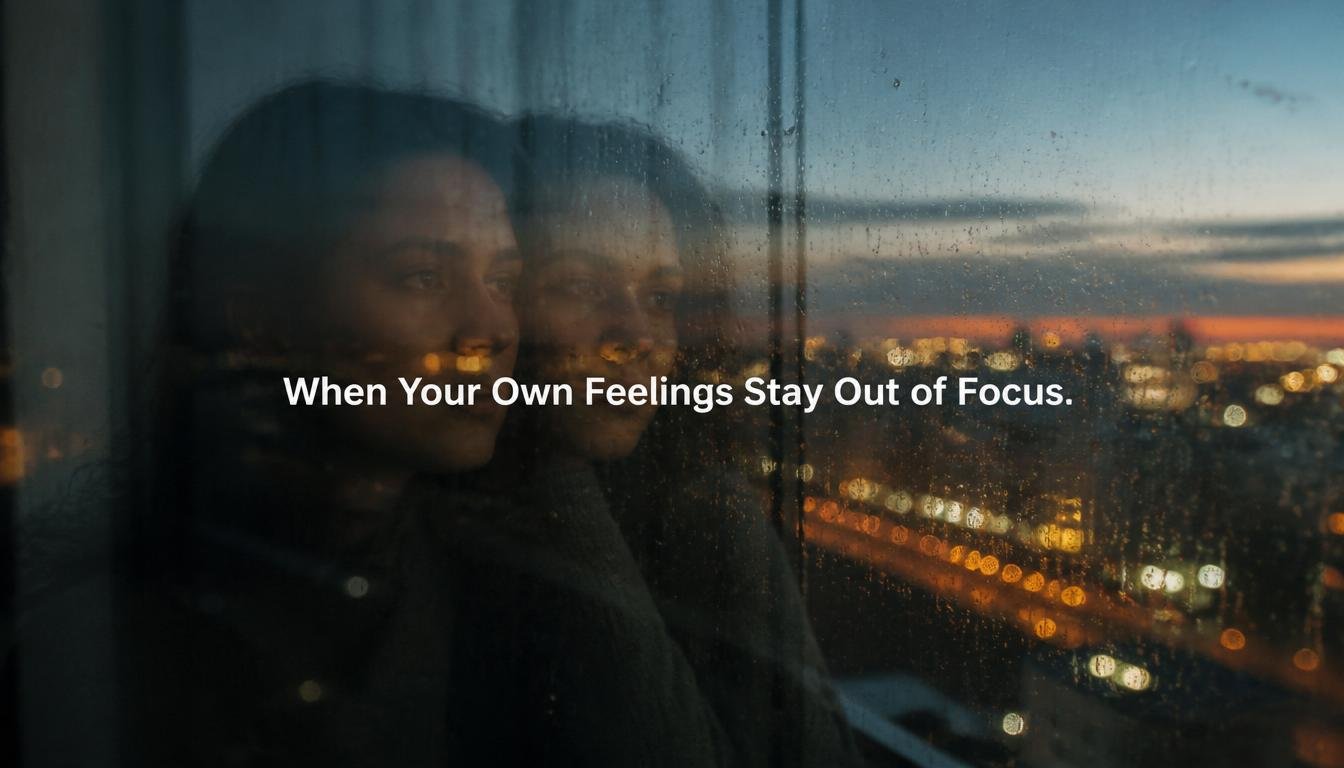
If you’ve ever typed “I can’t identify my own emotions” into a search bar, you’re not alone. You can probably read a stranger’s mood across a room in seconds. But when asked how you feel, you go blank. That gap usually comes down to language, not a lack of feeling.
You likely feel plenty. What’s missing is the translation step. That’s the part where a physical sensation turns into a clear word, like “hurt” or “jealous.” The gap can be frustrating, especially when everyone else seems to name their feelings so easily.
The Strange Split Between Reading Others and Reading Yourself
It’s an odd contradiction to sit with. You sense the second a friend’s mood shifts. You notice tension in a room before anyone speaks. Yet, when asked about your own week, you often land on something vague, like “fine” or “off.”
This split happens because the two skills rely on different processes. Reading others draws on outward cues, like tone and body language. Many people build that skill early, sometimes out of necessity. Naming your own state is different. It requires attention turned inward, and that skill doesn’t always grow at the same pace.
For some, this gap stays mild. Just mildly annoying. For others, it points to something more specific worth naming directly.
Why You Can’t Identify Your Own Emotions Even Though You Feel Deeply
When this happens, it isn’t because nothing is going on inside you. Something is almost always happening, physically at least. Your chest tightens. Your stomach drops. Your jaw clenches. The signal arrives. What’s missing is the next step, where that signal gets matched to an actual word.
This gap can show up as reaching for a vague label, like “stressed,” when something more specific is going on underneath. It can also show up as needing days to figure out why a moment bothered you, long after it happened.
Neither pattern means you’re shallow. If anything, people who struggle this way often feel things intensely. The feeling is loud. The word for it is just slow to arrive, or sometimes never arrives clearly at all.
What Alexithymia Actually Means
Alexithymia describes real difficulty naming and describing your own emotions, even while those emotions are being felt. The word comes from Greek roots meaning roughly “no words for feelings.” That’s a fairly accurate description of the experience.
It isn’t all or nothing. This trait sits on a spectrum. Many people carry a mild version without ever hearing the term. Some researchers estimate roughly one in ten people show meaningful traits of it. That’s far more common than the unfamiliar name suggests.
It’s worth separating this from simply being reserved or private. Someone can be open and social while still struggling to name what they feel internally. The two traits aren’t the same, even though they sometimes get confused.
Common and Not a Sign Something Is Wrong
This is genuinely common. Having it doesn’t automatically point to a deeper problem. It shows up more in people who grew up in homes where emotions weren’t discussed much, or where naming a feeling out loud wasn’t really modeled.
It can also grow stronger after a stretch of high stress, almost like the brain temporarily turns down the volume on internal signals to cope. In that sense, it can work like a protective habit that outlasts its usefulness, more than a trait you were simply born with.
None of this means something is fundamentally wrong with you. It means one specific skill, translating sensation into language, didn’t get much practice. Usually for reasons that trace back to circumstance, not character.

What This Looks Like in a Real Moment
Picture this. Someone close to you asks how you’re doing after a hard week. You open your mouth. Nothing specific comes out. You land on “I don’t know, just a lot,” even though something clearer is sitting right under the surface.
This isn’t avoidance. It’s a genuine block between the feeling and the word for it. The frustrating part is that it can look like avoidance from the outside, which sometimes leads people to push harder for an answer you don’t have ready yet.
Understanding feelings takes a beat longer for some people than others. That’s not a character flaw. It’s closer to a translation delay, and delays can shrink with the right kind of practice.
Why This Isn’t About Trying Harder
A common instinct is to push yourself to name the feeling faster, right in the moment. That usually backfires. Pressure tends to make the block worse, not better, since it adds a second layer of stress on top of the original one.
What actually helps is permitting yourself to answer slowly or later. Understanding feelings well enough to name them clearly often happens after the moment has passed, not during it. That’s normal, and it doesn’t mean you failed to process anything in real time.
Emotional Awareness Versus Reading Other People
It helps to separate two things that often get lumped together. Emotional awareness is noticing and naming what’s happening inside you. Reading other people well draws on something more outward-facing, like tone and context.
You can be genuinely strong in the second while still building the first. That combination is actually fairly common in people who struggle with this exact issue. A childhood spent closely watching someone else’s mood, for safety or connection, often builds outward skills early and fast. Sometimes at the cost of inward ones.
Understanding this distinction matters. It reframes the whole problem. You’re not missing emotional skill altogether. You’ve built one half strongly. The other half is simply catching up.
Where This Gap Shows Up Most
This pattern doesn’t affect every moment equally. It tends to show up hardest in situations with the most emotional weight. Ironically, those are the exact moments when clarity would help most.
A few common spots where people notice it:
- Right after an argument, when asked, “What are you even feeling right now”
- During therapy, when a clear answer is expected on the spot
- In relationships, when a partner wants a specific name for what’s wrong
- During big transitions, when everything feels like “a lot” with no further detail
Permitting yourself to say “I need a minute” is often more honest than forcing a guess. That’s true even when someone else wants an answer right away.
How to Build Emotional Awareness Starting Now
Building this skill usually starts with slowing down the gap between sensation and language. Not forcing an instant answer. A useful first step is naming physical sensations before naming the emotion itself. The body often signals faster than the mind can translate.
Try this short practice a few times a day, for two weeks:
- Pause and scan your body for tension or any unusual sensation.
- Describe that sensation in physical terms only, like “tight chest” or “heavy shoulders.”
- Guess at one possible emotion connected to it, even if you’re not sure.
- Write both the sensation and your guess down in one short note.
- Come back to old notes after a week and look for repeating patterns.
Over time, this builds a bridge between body and language. That bridge often strengthens faster than people expect.
Real Practice Closes This Gap Over Time
Yes, and that’s genuinely good news if this pattern has frustrated you. The gap sits between sensation and language, not in the emotions themselves. Practice tends to close it steadily, especially with low-pressure repetition.
Reading fiction with emotionally detailed characters has been shown in some studies to build emotional vocabulary. Almost like borrowing language from someone else’s clearly described inner world. Journaling in physical sensation terms, as described above, tends to work even faster for many people.
Progress here is usually gradual. Most people notice small shifts first, like catching a feeling an hour after it happens instead of days later. That comes long before any big, dramatic change.
A Small Script for Hard Conversations
It can help to have a few honest phrases ready for moments when someone wants an answer you don’t have yet. Saying “I’m still figuring out what this is” tends to land better than forcing a guess just to fill the silence.
Another useful line is “Can I get back to you on that in a bit?” This buys real time without shutting the conversation down. Most people respond better to honesty about the delay than to a rushed, inaccurate answer.
Practicing these phrases in low-stakes moments makes them easier to reach for later, when understanding feelings quickly actually matters most, like in the middle of a tense conversation with someone you care about.
Key Takeaways
- Struggling to name your own emotions while reading others easily is a real, common pattern.
- The gap usually sits in translating sensation into language, not in a lack of feeling itself.
- Alexithymia describes this pattern at a stronger level, and it exists on a spectrum.
- It often grows from environments where feelings weren’t discussed, or as a coping habit after overwhelm.
- Naming physical sensations first, before guessing the emotion, tends to build this skill fastest.
Learning to Trust the Signal
If you’ve spent years reading everyone else’s emotional weather while your own stayed foggy, that imbalance makes sense. It likely traces back to how you learned to survive or connect early on. It isn’t a permanent flaw in how you’re built, even if it still sometimes feels like you can’t identify your own emotions on the days that matter most.
The gap between feeling something and naming it clearly can close. Usually through small, patient practice, not one breakthrough moment. Starting with the body, instead of reaching straight for the right word, tends to work better than most people expect.
Give the sensation-first practice a try this week. Even just once a day. That small shift in attention is often the first real crack in a pattern that’s been running on autopilot for a long time.
Frequently Asked Questions
This usually happens because of a gap between sensing an emotion physically and turning that sensation into a clear word. The feeling itself is often present and strong. The language step just didn’t get much practice, often due to how emotions were or weren’t discussed growing up. This gap can narrow with practice over time.
Alexithymia is a term for real difficulty identifying and describing your own emotions, even while those emotions are genuinely being felt. It sits on a spectrum rather than being a fixed diagnosis, and many people carry mild traits of it without ever hearing the term. It isn’t the same as being reserved or private.
Yes. Some research suggests roughly one in ten people show meaningful traits of it. It shows up more in people who grew up in homes where feelings weren’t discussed openly, or after a period of significant stress. Having this pattern doesn’t automatically point to a deeper problem.
A useful starting point is naming physical sensations, like tightness or heaviness, before trying to guess the exact emotion behind them. Short daily check-ins, paired with writing both the sensation and a guessed emotion down, tend to build this skill gradually. Reading emotionally detailed fiction can also help by building vocabulary over time.
Yes. Because the difficulty usually lies in the translation step, not in the emotions themselves, consistent practice tends to close the gap over time. Most people notice gradual shifts, like recognizing a feeling sooner after it happens, rather than one sudden change. Patience with the process tends to matter more than the intensity of effort.






- Be Respectful
- Stay Relevant
- Stay Positive
- True Feedback
- Encourage Discussion
- Avoid Spamming
- No Fake News
- Don't Copy-Paste
- No Personal Attacks
- Be Respectful
- Stay Relevant
- Stay Positive
- True Feedback
- Encourage Discussion
- Avoid Spamming
- No Fake News
- Don't Copy-Paste
- No Personal Attacks
