Physical Fitness Routines That Actually Deliver Results
Published: 29 Jun 2026
Introduction
You have probably started a new exercise routine at some point and stopped within a few weeks. Not because you lacked willpower, but because the routine did not fit your life, your body, or your goals. That is the most common reason people struggle to stay active.
Getting and staying in shape is simpler than most people think, but it is not easy. It requires understanding what your body actually needs, building habits that last, and avoiding the mistakes that derail most people before they see results. That is exactly what this guide covers.
Physical fitness routines that deliver real results are not about doing the most intense thing possible. They are about doing the right things consistently. Each section of this article gives you a clear, practical piece of that picture.

1. What It Really Means to Be Fit
Physical fitness means more than looking a certain way or being able to run fast. Physical fitness means your body can handle the demands of daily life with energy left over. You climb stairs without losing breath. You carry groceries without strain. It means you can climb stairs without losing breath, carry groceries without strain, and recover from illness or injury more easily than someone who is not active.
A broader physical fitness means having good strength, endurance, flexibility, body composition, and heart health, all working together. True fitness is well-rounded. Focusing on just one of these, like lifting heavy weights but never doing cardio, leaves gaps. True fitness is well-rounded.
Being fit also affects how you feel day to day. Regular movement improves sleep. It lifts mood, sharpens focus, and reduces the risk of most lifestyle-related diseases. The benefits show up inside the body long before they show up in a mirror.
2. The Five Key Components Everybody Needs
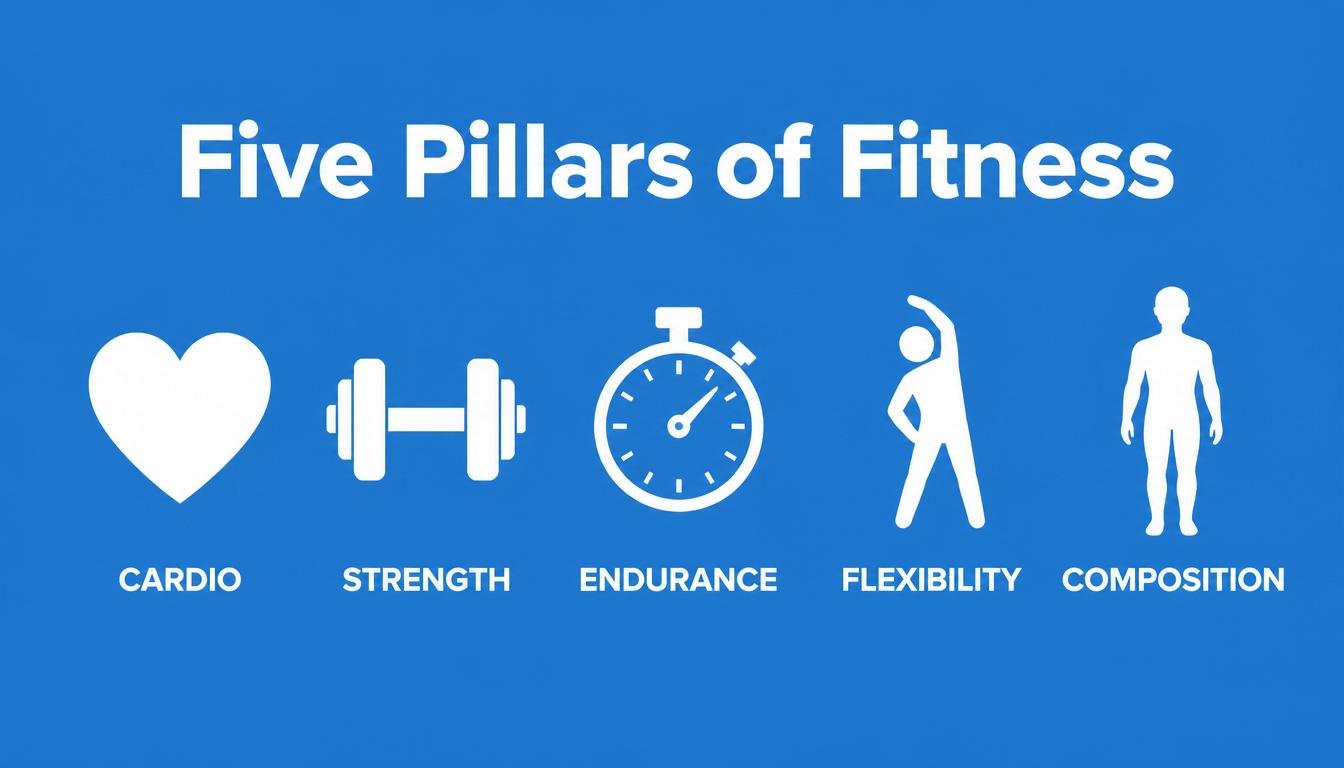
The 5 components of physical fitness give you a complete framework for understanding what a balanced exercise routine actually covers. Each one matters, and each one can be trained.
The first of the 5 components of physical fitness is cardiovascular endurance. This is how well your heart and lungs deliver oxygen during sustained effort walking, running, swimming, or cycling. Good cardiovascular endurance is one of the strongest predictors of long-term health.
The remaining 5 components of physical fitness are muscular strength, muscular endurance, flexibility, and body composition. Muscular strength is how much force your muscles can produce. Muscular endurance is how long they can keep working. Flexibility is your range of movement. Body composition is the ratio of muscle to fat in your body. Together, these five cover everything your body needs to function well.
3. How Your Fitness Level Is Measured and Scored
Testing your fitness level gives you a baseline. Without measuring where you are, it is very hard to know whether your training is actually working or what to focus on next.
A standard fitness assessment typically covers cardiovascular endurance, muscular strength, muscular endurance, and flexibility. Common formats include a timed run or walk, push-up and sit-up counts, and a sit-and-reach test. Physical fitness test scoring compares your results to age and gender norms, giving you a clear picture of where your fitness sits relative to others.
Physical fitness test scoring is most useful when tracked over time rather than seen as a one-time grade. Taking a simple test every 8 to 12 weeks and comparing the results shows you whether your approach is producing real change. Progress in these scores is one of the most motivating things you can see when you are putting in consistent effort.
4. Building a Routine That Actually Works for You
Effective physical fitness routines are not copied from someone else’s life. They are built around your schedule, your current level, and your actual goals. A routine that fits your life gets done. One that does not, does not.
Good exercise routines for beginners combine three types of movement each week. Two to three sessions of strength training using bodyweight or weights. Two sessions of cardio at a comfortable pace. And daily light movement like walking, stretching, or climbing stairs. This balance hits all five fitness components without overwhelming a beginner.
As you grow stronger, effective routines evolve. You add weight, increase pace, or try new movement patterns. The body adapts to what it is asked to do, which means you have to gradually increase the challenge to keep seeing progress. This principle is called progressive overload, and it applies to every level of fitness.
5. How Much Activity Do You Actually Need Each Week
The World Health Organization recommends that adults get at least 150 to 300 minutes of moderate activity per week, or 75 to 150 minutes of vigorous activity. This sounds like a lot but it breaks down to just 20 to 40 minutes on most days.
Moderate activity is anything that raises your heart rate and breathing noticeably but still lets you talk. A brisk walk, a casual bike ride, a light swim. Vigorous activity is more intense, such as running, fast cycling, or a challenging workout session.
Strength training on two or more days per week is also recommended. This does not have to mean a gym. Bodyweight exercises at home, resistance bands, or any form of movement that makes your muscles work against resistance count.
Even small daily increases in movement produce real benefits. Taking the stairs, walking instead of driving short distances, or adding a 10-minute walk after meals all add up. You do not have to do it all in one session. Spreading the movement across the day works just as well.
6. Common Mistakes That Stop Progress
Most people who stop exercising do so because of a handful of very predictable mistakes. Knowing them in advance is half the solution.
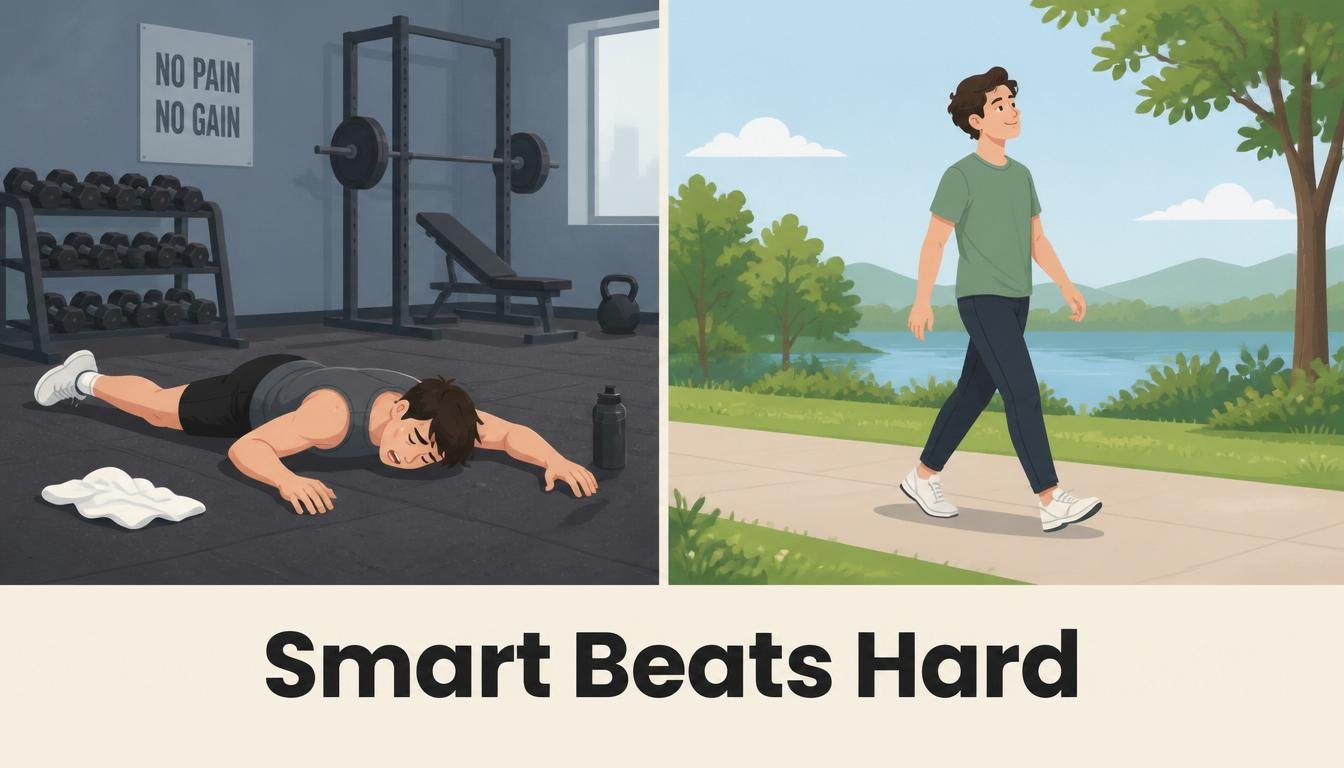
Starting too hard, too fast is the most common one. The first week feels great, and you push hard. By week two, your body is sore, your energy is low, and the whole thing starts to feel like punishment. Starting at 60 to 70 percent of what you think you can do is almost always the smarter approach.
Skipping rest days is another frequent mistake. Rest is when the body actually gets stronger. Muscles rebuild during recovery, not during the workout itself. At least one or two rest days per week are not optional. They are part of the process.
Setting vague goals is also a trap. “I want to get fitter” gives you nothing concrete to aim for or track. A specific goal like “I want to walk 30 minutes without stopping” or “I want to do 10 push-ups” gives you something to measure and something to celebrate when you get there.
7. Staying Consistent When Motivation Fades
Motivation gets you started. Habit keeps you going. Relying on feeling motivated to exercise is one of the least reliable strategies available. Motivation comes and goes. Systems stay.
Schedule your movement like any other appointment. Put it in your calendar. Decide in advance what you will do, when, and for how long. The decision fatigue of figuring this out each day is one of the biggest reasons people skip sessions. Remove the decision, and you remove most of the resistance.
Find movement you actually enjoy. Exercise does not have to be miserable to be effective. Dancing, swimming, hiking, playing a sport, or just walking somewhere interesting all count. The best routine is the one you will actually do.
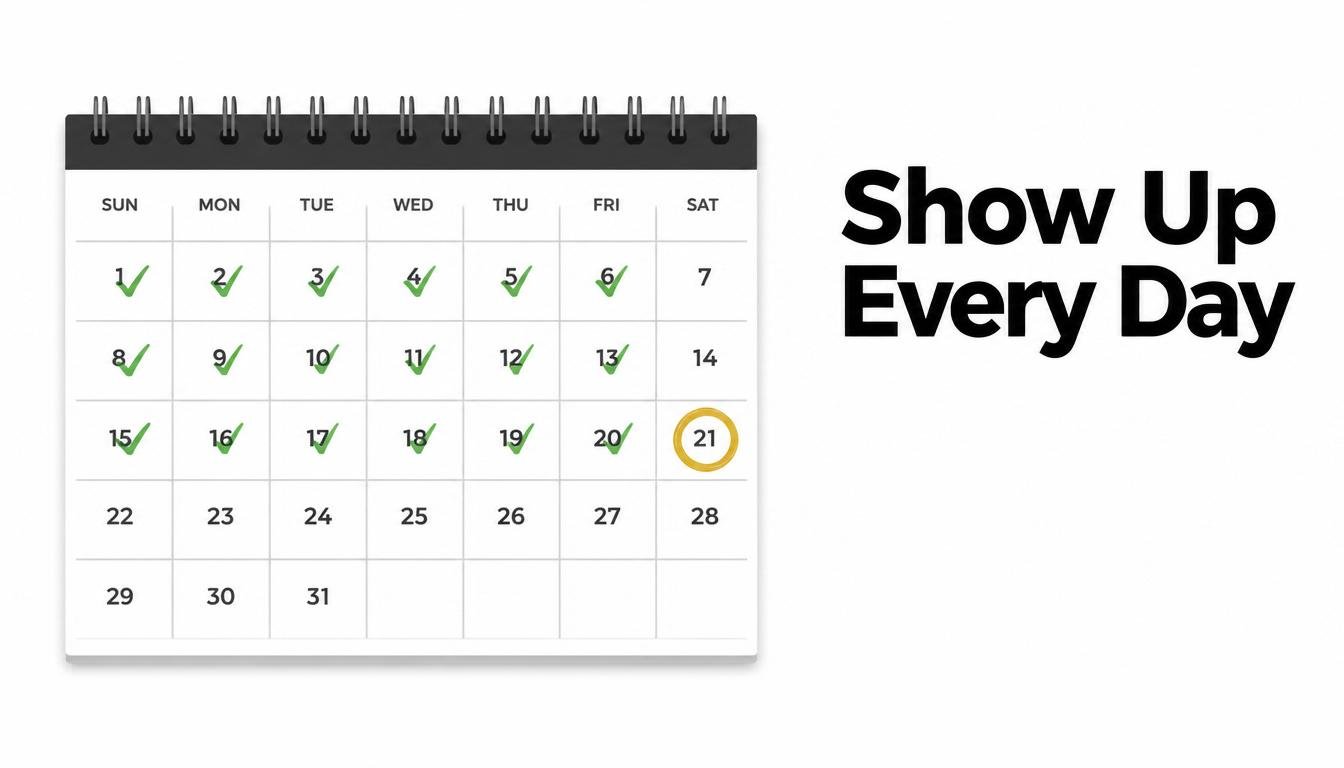
Track your progress in some form, even a simple tick on a calendar. Seeing a streak of consecutive days builds momentum and makes missing feel like something worth avoiding. On the hard days, aim for the minimum. A ten-minute walk still counts. Something always beats nothing.
Conclusion
Getting in shape and staying there is not about discipline alone. It is about building a system that fits your life, understanding what your body needs, and making movement a regular part of your week rather than a special effort.
Start where you are. Pick one small habit today. A 20-minute walk. A set of bodyweight exercises. A stretch before bed. Build from there. The people who get fit and stay fit are not the ones who did the most in week one. They are the ones who kept showing up in weeks twelve, twenty, and fifty.
Your body is built to move. Give it the chance, and it will reward you in ways that go far beyond how you look.
Related Articles
- Effective Workout Routines That Anyone Can Start Today
- Best Strength Training Benefits for Your Overall Health
- Best Cardio Exercise for Beginners to Burn Fat Daily
Frequently Asked Questions
Physical fitness is the ability to carry out daily activities with energy and without excessive fatigue. It covers cardiovascular endurance, muscular strength and endurance, flexibility, and body composition, all working together.
It is one of the most important factors in long-term health. Regular movement reduces the risk of heart disease, diabetes, and many cancers. It also improves sleep, mood, energy, and mental sharpness at every age.
A physical fitness test gives you a clear starting point. Physical fitness test scoring helps you understand where you stand relative to others. Without this data, it is difficult to build the right plan or track real progress.
The five main components are cardiovascular endurance, muscular strength, muscular endurance, flexibility, and body composition. A good fitness routine addresses all five rather than focusing on just one.
Adults are recommended to get 150 to 300 minutes of moderate activity or 75 to 150 minutes of vigorous activity per week, plus muscle-strengthening activity on two or more days. This breaks down to roughly 20 to 40 minutes of movement on most days.






- Be Respectful
- Stay Relevant
- Stay Positive
- True Feedback
- Encourage Discussion
- Avoid Spamming
- No Fake News
- Don't Copy-Paste
- No Personal Attacks
- Be Respectful
- Stay Relevant
- Stay Positive
- True Feedback
- Encourage Discussion
- Avoid Spamming
- No Fake News
- Don't Copy-Paste
- No Personal Attacks
