Effective Workout Routines That Anyone Can Start Today
Published: 30 Jun 2026
Introduction
Everyone knows exercise is good for them. But knowing and doing are very different things. The gap between the two is usually not laziness. There is confusion about where to start, what to do, and how to keep going once the initial enthusiasm fades.
The good news is that effective workout routines do not need to be complicated, expensive, or time-consuming to produce real results. Whether you have never trained before, are coming back after a long break, or want to sharpen what you are already doing, this guide has something for you.
Each section covers a different piece of the puzzle, from where to begin to bodyweight and strength training to how to plan your week. By the end, you will have a clear, practical approach to getting active and staying that way.
1. Why So Many People Struggle to Stick With a Training Plan
The most common reason people stop training is not a lack of motivation. It is starting with a plan that does not fit their life. A training schedule that demands one hour every day, seven days a week, sounds impressive. But for most working adults, it falls apart within two weeks.
A second reason is expecting results too fast. The body changes slowly and steadily. Someone who expects to see a transformation in two weeks and sees nothing often assumes the plan is not working and quits. The plan was fine. The timeline was not realistic.
A third reason is choosing an exercise style they genuinely dislike. If you hate running, a running-based training plan will not last. Movement you enjoy is always more sustainable than movement you endure. The best fitness plan is the one you actually do.
2. Where to Start if You Are a Complete Beginner
Beginner workout routines work best when they are short, simple, and easy to repeat. Three sessions per week of 20 to 30 minutes each are enough to produce real change when you are starting. More is not better for beginners. Consistency is.
A simple set of beginner workout routines covers three movement types. Push movements like push-ups train the chest, shoulders, and arms. Pull movements like rows train the back and biceps. Leg movements like squats and lunges train the lower body. Rotate through these with rest days in between, and you cover the whole body without overloading any one part.
The most important rule for beginner workout routines is to start easier than you think you need to. The first two weeks should feel manageable. This builds the habit without burning you out before you have even got started.
3. The Best Training Approaches for Real Results
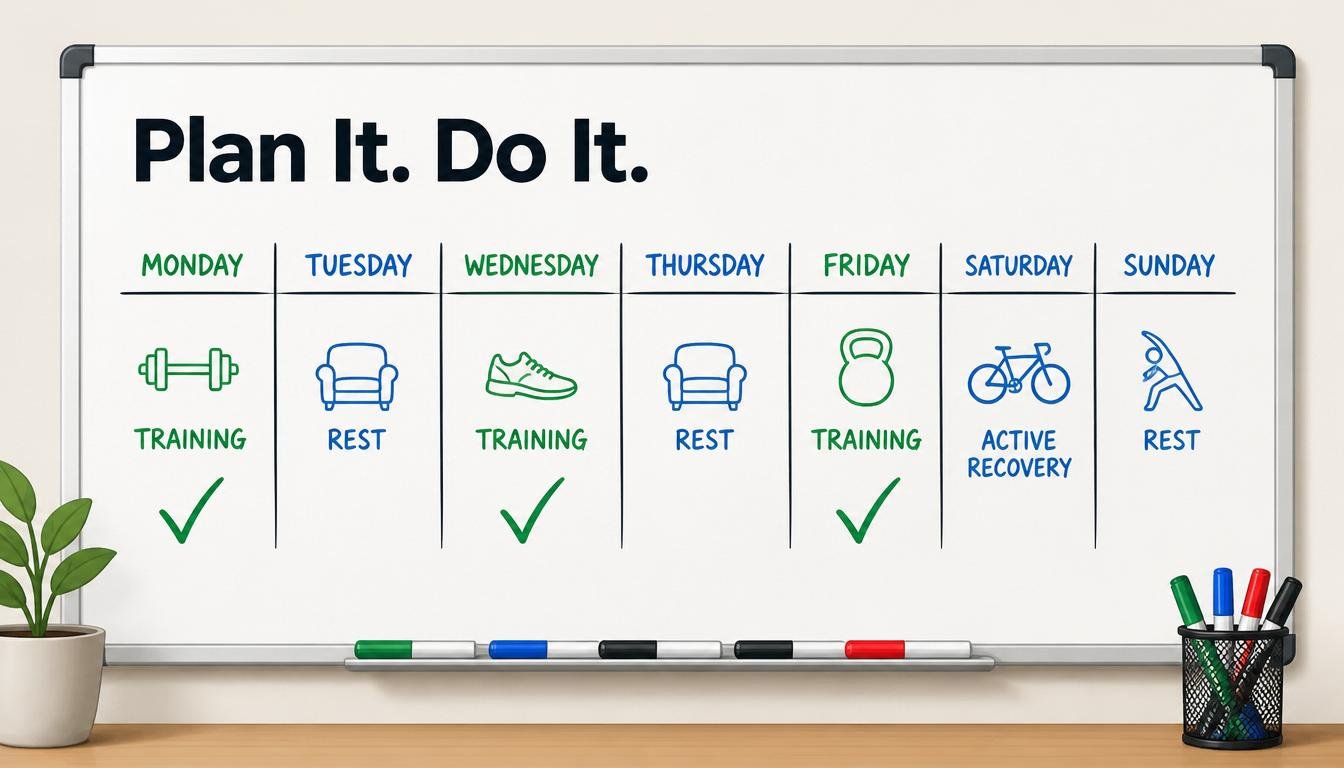
The best workout routines are not the ones with the most exercises or the most intense sessions. They are the ones that balance challenge with recovery, hit all muscle groups over the course of a week, and progress gradually over time.
A full-body plan three times per week is one of the best workout routines for people with limited time. Each session trains the whole body, so even if you miss a day, you have not skipped any muscle group entirely. This makes the schedule more forgiving and easier to recover from.
An upper-lower split is another of the best workout routines for people with four days available. Upper body on day one, lower body on day two, rest, then repeat. This allows more volume per session while still giving each muscle group enough recovery time to rebuild.
Whatever format you choose, progressive overload is the engine of progress. Gradually increasing reps, weight, or session length over weeks is what keeps the body adapting and the results coming.
4. Bodyweight Training You Can Do Anywhere
Calisthenic workout routines use your own bodyweight as resistance. No gym membership, no equipment, no excuses. Push-ups, squats, lunges, dips, planks, and pull-ups are the foundation of calisthenic workout routines, and together they cover every major muscle group.
The appeal of calisthenic workout routines is how accessible they are. You can do them in your bedroom, in a park, in a hotel room, or in a car park if needed. The only requirement is your own body and a bit of space. This removes the biggest practical barrier most people have to staying active.
Do not underestimate bodyweight training. At higher levels, it produces impressive strength and muscle. Athletes and gymnasts build remarkable bodies through calisthenics alone. Start with the basics, master them, and progress to harder variations over time.
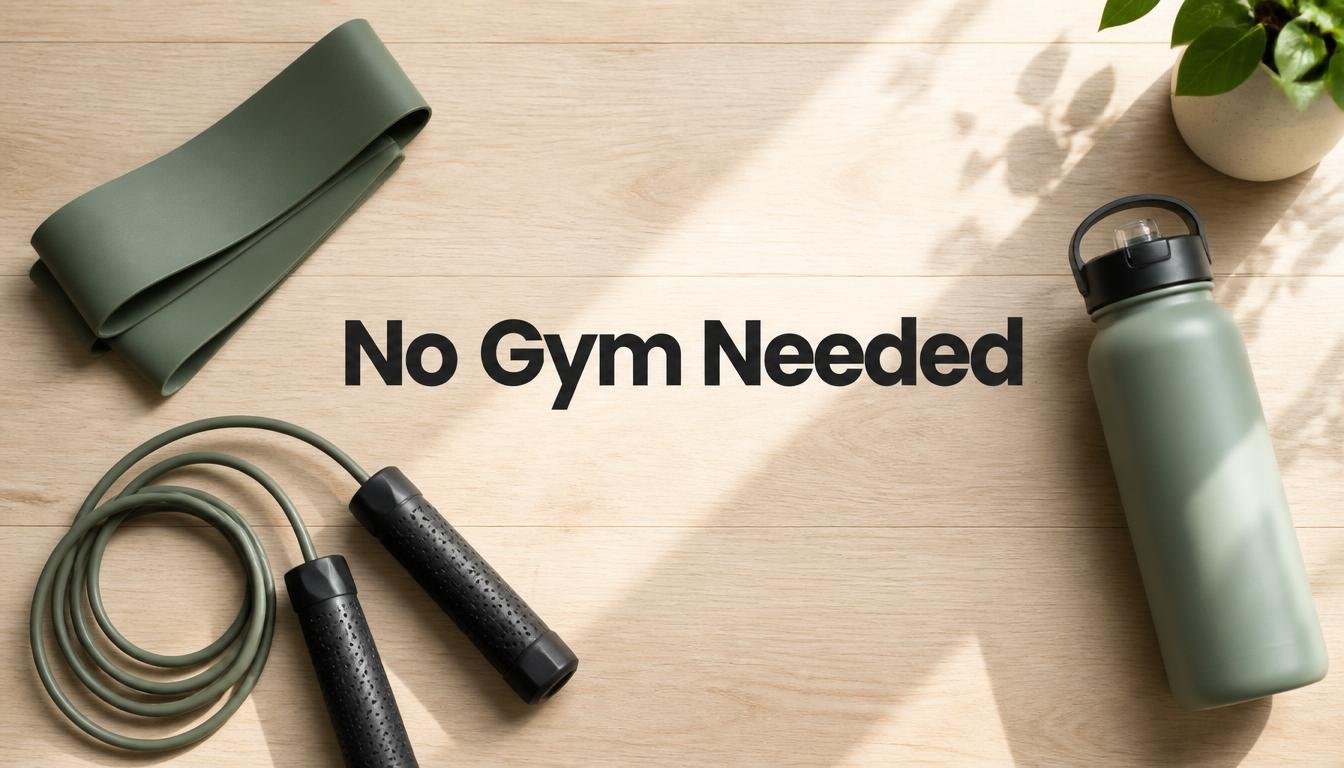
5. Building Strength Without a Gym
Strength workout routines build the kind of physical capacity that makes daily life easier. Carrying things. Climbing stairs. Getting up off the floor quickly. These functional benefits are often more motivating in practice than any aesthetic goal.
Effective strength workout routines at home use resistance bands, dumbbells, or a set of progressively harder bodyweight exercises. A simple set of movements rows, presses, squats, deadlifts, and carries done with increasing resistance over weeks produces steady strength gains without a single machine.
The key principle in strength workout routines is tension. Your muscles need to work against meaningful resistance to grow stronger. Whether that resistance comes from a barbell, a resistance band, or a heavy backpack does not matter. What matters is that the movement feels challenging in the final few reps.
6. How to Structure Your Week for Maximum Benefit
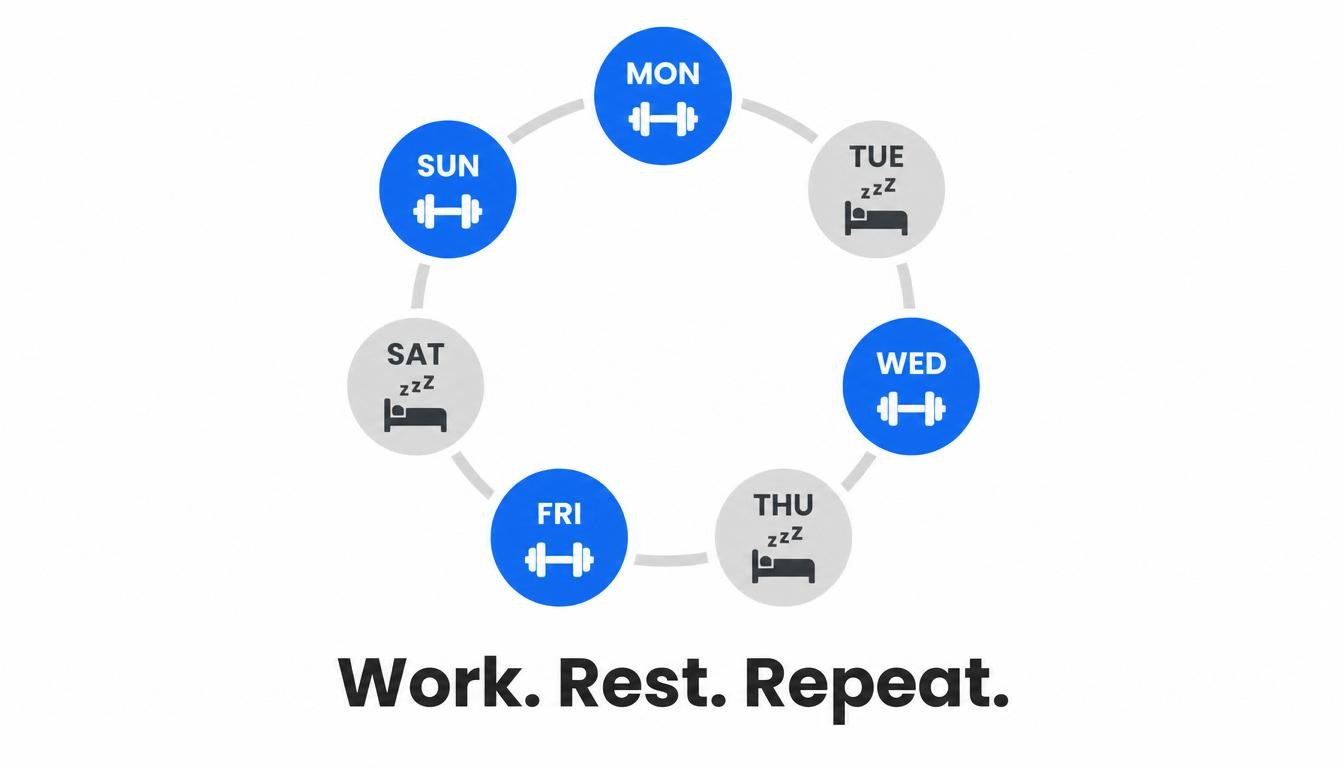
A 3-day split is one of the most popular and effective training structures for people at any level. You train three days per week, rest one, train again, and repeat. This gives each muscle group time to recover while keeping the training frequency high enough to produce consistent progress.
On a 3-day split, each session can focus on push movements, pull movements, and legs, respectively. Or you can train the full body each session at a lower volume. Both work well. The choice comes down to how much variety you want in each session.
Rest days are not wasted days. Sleep, light movement like walking, and good nutrition on rest days are what actually turn the training stimulus into real physical progress. Treat rest as part of the plan, not a break from it.
7. How Many Exercises to Do in One Session
More exercises do not mean a better session. Quality of movement and appropriate challenge matter far more than the number of exercises on the list.
For a full-body session, three to five exercises are usually enough. One push, one pull, one lower body movement, and one core exercise cover the essentials in 20 to 30 minutes. For a split session targeting one body part, five to seven exercises give more variety and volume per muscle group.
Beginners often make the mistake of copying advanced programmes with ten or twelve exercises per session. These programmes are designed for people whose bodies have already adapted to high volume. Starting there leads to excessive soreness and burnout. Three to five focused exercises done well beat ten done poorly every single time.
Conclusion
Getting active does not require perfect conditions, a fancy gym, or an elaborate plan. It requires a simple structure, a realistic schedule, and the willingness to show up consistently over time.
Start with three sessions this week. Keep each one short and manageable. Focus on doing the movement well rather than doing a lot of it. Build from there. The results will come, and they will stay, because the habit that produces them will stay too.
The only training plan that does not work is the one that never gets started. Begin today.
Related Articles
- Physical Fitness Routines That Actually Deliver Results
- Best Cardio Exercise for Beginners to Burn Fat Daily
- Best Strength Training Benefits for Your Overall Health
Frequently Asked Questions
A 3-day split is a training structure where you exercise three days per week with rest days in between. Each session can train the full body or target different muscle groups on different days. It is one of the most balanced formats for beginners and intermediate trainees.
The most effective split is the one you can follow consistently. For most people, a full-body 3-day plan or an upper-lower 4-day plan works well. More advanced trainees may benefit from a push-pull-legs split with higher frequency.
Common reasons include starting too intensely, not allowing enough recovery, expecting results too quickly, or following a plan that does not match your current fitness level. Simplifying the plan and focusing on consistency usually solves most of these problems.
A structured training plan removes decision fatigue, ensures all muscle groups are trained regularly, and allows for progressive overload over time. Without a plan, most people either do too much, too little, or skip sessions when motivation dips.
For a full-body session, three to five exercises are usually enough. For a split session focused on one muscle group, five to seven work well. Quality of movement and appropriate challenge matter more than the number of exercises.






- Be Respectful
- Stay Relevant
- Stay Positive
- True Feedback
- Encourage Discussion
- Avoid Spamming
- No Fake News
- Don't Copy-Paste
- No Personal Attacks
- Be Respectful
- Stay Relevant
- Stay Positive
- True Feedback
- Encourage Discussion
- Avoid Spamming
- No Fake News
- Don't Copy-Paste
- No Personal Attacks
