Boost Creative Thinking Power to Solve Complex Challenges
Published: 23 Jun 2026
Introduction
You are stuck. The problem in front of you has no clear answer. The usual approach has not worked. Most people stop here. But this is exactly the moment where an inventive mind finds a way through.
The ability to look at a challenge from a fresh angle is not a gift some people are born with. It is a skill. Like any skill, it can be learned and made stronger over time with the right habits and understanding.
This guide covers what original thinking really means, why it matters, the stages a fresh idea goes through, and how to build an inventive approach into your daily life. Each section is short, clear, and easy to apply right away.

1. Why an Inventive Mind Changes Everything
The world changes fast. Old answers do not always fit new problems. This is why the ability to think in fresh and original ways is now one of the most valued skills in almost every field.
Employers want people who spot problems early and come up with new solutions. A checklist cannot teach this. It comes from a mind that has been trained to look past the obvious and find what others miss.
In daily life, it matters just as much. When you are stuck, a fresh perspective gives you a way forward. It bridges the gap between not knowing what to do and finding something worth trying.
People who think inventively also stay curious longer. They see more possibilities in ordinary situations. They bring energy to challenges that others walk away from. That quality, once built, touches every part of life.
2. Other Names for an Imaginative Mind
Understanding creative mind synonyms helps you spot this quality in different settings. The same kind of inventive approach appears under many names depending on the context.
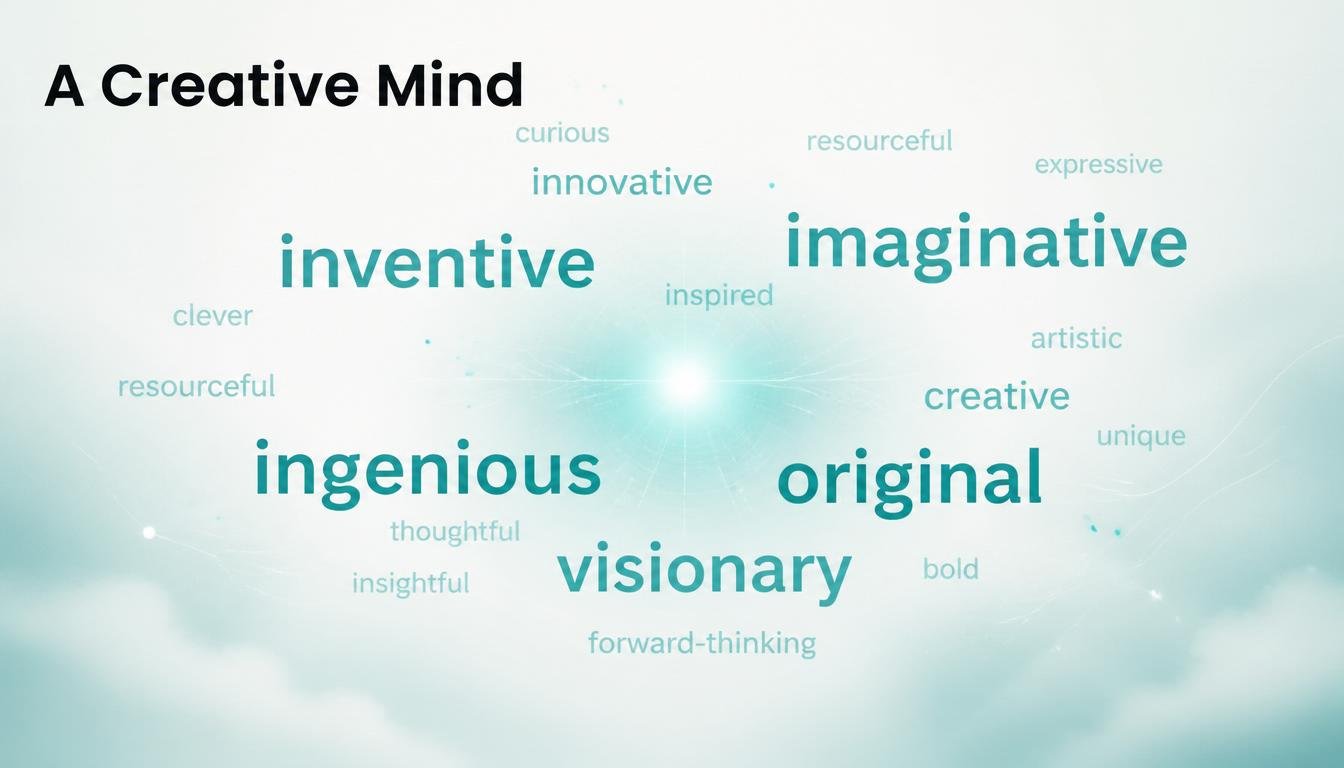
Inventive, imaginative, and ingenious are all creative mind synonyms that point to the same core quality. An inventive person finds new ways to do old things. An imaginative person pictures what does not yet exist. An ingenious person finds clever solutions to tough problems with whatever is at hand.
Visionary and original are creative mind synonyms often used for people who think ahead of their time. A visionary sees where things are going before others do. An original thinker builds something new from the ground up rather than copying what came before.
In professional settings, a common creative thinking synonym is innovative thinking. In academic circles, lateral thinking is a widely used creative thinking synonym coined by Edward de Bono. It means approaching a problem from the side rather than head-on. A third creative thinking synonym you may come across is divergent thinking, which describes generating many ideas from one starting point.
3. The Four Stages Every Fresh Idea Goes Through
Good ideas rarely appear out of nowhere. There are creative thinking stages the mind moves through, often without us noticing. Understanding these creative thinking stages makes it easier to trust the process when it feels slow.
The first stage is preparation. You gather information, ask questions, and take in everything relevant. This feels like hard work because it is. You are loading your mind with what it needs.
The second stage is incubation. You step back and stop pushing. You sleep on it, go for a walk, or do something else. Your brain keeps working quietly in the background, making connections you cannot force on your own.
The third stage is illumination. The idea arrives, often at an unexpected moment. This is the aha moment that feels magical but is simply the result of the first two creative thinking stages doing their quiet work.
The fourth stage is verification. You test the idea, shape it, and see if it holds up in real life. Many good ideas need adjustment before they become truly useful.
4. Real Life Scenarios That Show It in Action
Seeing how an inventive approach plays out in real situations makes it easier to spot in yourself and grow on purpose.
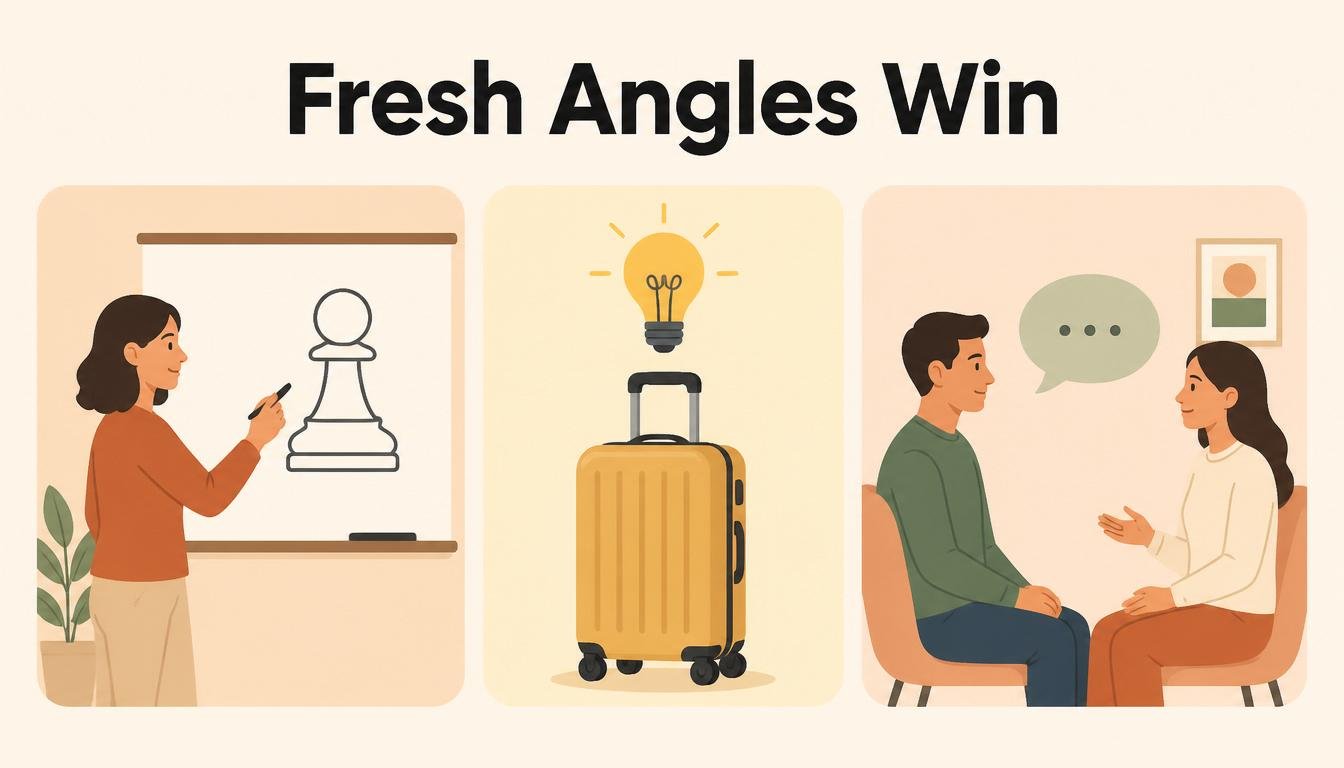
A clear creative thinking example is a teacher whose students are struggling with a concept. She does not just explain it louder. She finds a new way in, maybe through a story or a game the students already relate to. The goal stays the same. The path changes.
Another creative thinking example comes from product design. The original suitcase had no wheels. For decades, people simply carried them. Then someone asked: What if it rolled? That one question changed an entire industry. The problem was not new. The angle was.
A third creative thinking example is closer to home. You have a disagreement with someone, and the usual approach is not working. An inventive thinker does not argue harder. They change the frame entirely, perhaps by asking what the other person actually needs rather than what they are saying. That shift opens solutions that a direct argument would never find.
5. How to Build an Inventive Approach Daily
An original way of thinking grows with practice. These habits build it most reliably over time.
Ask what-if questions every day. What if we did this backwards? What if there were no rules? What if the opposite were true? These questions push your mind off the obvious path and into unfamiliar ground. That is exactly where new ideas tend to live.
Read and explore widely. People with rich imaginative thinking often connect ideas from very different fields. A biologist who reads philosophy. An engineer who studies poetry. The more varied your inputs, the stronger your mental connections become.
Allow yourself to be bored sometimes. When your mind has nothing to react to, it starts to generate. Some of the best ideas come during quiet moments that most people fill with their phones. Let your mind wander. It is working even when it looks like it is not.
Keep an idea notebook. Write down every idea, even the ones that seem silly. Bad ideas often contain the seed of a good one. Writing regularly trains your brain to keep producing because it knows ideas will be caught rather than forgotten.
6. Visual Tools That Help New Ideas Flow
Not everyone thinks best through words and logic. Many people find that visual tools unlock ideas that written notes never capture. This is where mind maps, sketches, and creative thinking clipart become genuinely useful.
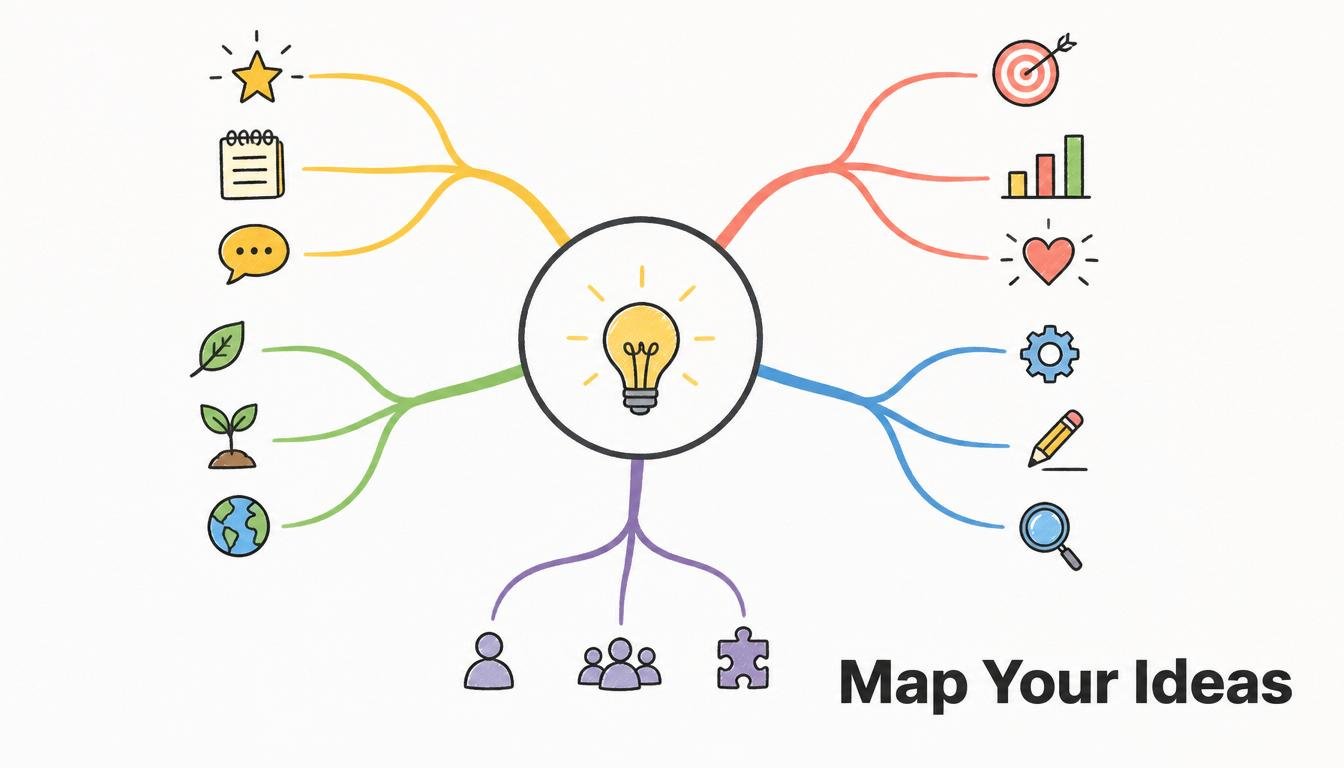
A mind map is one of the simplest tools available. Write the central problem in the middle of a page. Draw branches outward for every related thought. Each branch can grow smaller branches of its own. The result is a visual map of how your mind connects ideas, which often reveals angles that a plain list would miss.
In team sessions, creative thinking clipart, simple icons that represent ideas and processes, helps groups move fast and stay aligned. A light bulb for a new idea, a gear for a process, an arrow for direction. Visuals cut through long explanations quickly.
Rough sketching is another powerful habit. You do not need to draw well. A quick sketch of an idea forces your brain to give it a shape, which shows whether it is solid or still vague. Free creative thinking clipart packs available online can also give you ready-made visual templates for brainstorming without any design skills needed.
Conclusion
An inventive mind is not something you either have or do not. It is something you build, one small habit at a time. The more you question, explore, and give your mind space to wander, the more naturally fresh ideas begin to appear.
The next time you face a problem with no clear answer, slow down. Ask a different question. Look at it from a new angle. The answer is often already there, waiting for a fresh way of looking.
Pick one habit from this guide today. Try it for a week. Then add another. Over time, you will find yourself approaching challenges in ways that surprise even you.
Related Articles
- Building Strong Mind Habits for Better Focus and Clarity
- How to Develop a Better Mindset and Change Your Life
- Natural Stress Relief Methods to Calm Your Thoughts
Frequently Asked Questions
Creative thinking skills are the abilities that help you see problems from new angles, generate original ideas, and find solutions that are not immediately obvious. They include curiosity, flexibility, and the ability to make unexpected connections between ideas.
Anyone who finds a new solution to an old problem is showing it. A teacher who uses a game to explain a hard concept, an engineer who finds a cheaper way to build something, or a person who resolves a conflict by asking a better question.
It helps you solve problems that have no ready-made answer, adapt when plans fall apart, and bring fresh value to your work and relationships. In a fast-changing world, it is one of the most useful skills a person can develop.
It is the ability to look at a situation or problem in a new way and come up with ideas that are both original and useful. It combines open, free thinking with the practical ability to turn ideas into real solutions.
Practice asking what-if questions, read widely across different subjects, allow yourself time to think without distraction, and keep a notebook for ideas. These habits, done regularly, train the brain to think in more open and original ways over time.






- Be Respectful
- Stay Relevant
- Stay Positive
- True Feedback
- Encourage Discussion
- Avoid Spamming
- No Fake News
- Don't Copy-Paste
- No Personal Attacks
- Be Respectful
- Stay Relevant
- Stay Positive
- True Feedback
- Encourage Discussion
- Avoid Spamming
- No Fake News
- Don't Copy-Paste
- No Personal Attacks
