Best Passive Income Ways to Earn Extra Cash
Published: 15 Jun 2026
Introduction
What if your money kept working even when you were asleep, on holiday, or simply spending time with people you care about? That is the core idea behind passive income, and it is far more achievable than most people believe. It is not about getting rich overnight. It is about building streams of money that flow in without requiring your constant attention.
The difference between people who build real wealth and those who always feel financially stretched often comes down to this one thing. Active workers trade time for money. Wealth builders create systems where money flows in whether they are working or not. Building even one reliable passive income stream changes your financial position in a meaningful way.
This article covers the most practical and proven options available today. Each section explains what is involved, what the realistic potential looks like, and what it takes to get started. Whether you have a lot to invest or just a little, you will find something here that fits your situation.

1. Why Earning While You Sleep Is Not Just a Dream
Most people grow up with one model of making money. You show up, you work, you get paid. Stop working, and the money stops too. This model is familiar, and it works, but it has a ceiling. There are only so many hours in a day, and your earnings are limited by how many of them you can sell.
Building streams that run without your constant presence removes that ceiling. A rental property generates rent whether you are working or resting. Dividends from shares arrive quarterly regardless of how your week went. A digital product you created once can be sold thousands of times without any additional effort from you.
This does not mean zero effort. Almost every worthwhile earning stream requires real work up front. The difference is that the work is front-loaded. You build something once, and it generates returns over time. That time investment, made consistently and intelligently, is what separates people who feel financially free from those who always feel one paycheck away from trouble.
The earlier you start, the more time these sources have to grow. And as with all things financial, time is the most powerful ingredient in the recipe.
2. Top Ways to Make Your Money Work for You
There are many ways to build earnings that flow in without active work, ranging from those that need significant capital to those that need almost none. Here are the most reliable options.
Dividend investing is one of the most established passive income ways. You buy shares in companies that distribute a portion of their profits to shareholders at regular intervals. Over time, as you accumulate more shares and those companies grow, the dividend payments compound. This approach requires patience but produces reliable results for those who stay consistent.
Rental property is one of the most proven passive income ways. You own a property and rent it out. It generates monthly rent while the asset grows in value over time. Managing tenants takes some effort, but many landlords use property management services to handle the day-to-day work, making it genuinely hands-off.
High-yield savings and fixed deposits offer a simpler entry point. Returns are lower, but risk is minimal, and money stays accessible. For emergency funds or short-term holdings, these are practical tools.
Digital products such as ebooks, templates, courses, and stock photographs can be created once and sold repeatedly through platforms like Gumroad, Udemy, or Etsy. The upfront time investment can be significant, but the ongoing effort is minimal once the product is live and discoverable.
3. Real Examples That Work for Everyday People
Looking at real-life passive income examples helps make the concept feel achievable. These are not stories about millionaires. They are ordinary people who built something meaningful over time.
A teacher who creates an online course about the subject they already teach every day is one of the clearest passive income examples. They invest a few weeks building the course, upload it to a platform, and earn from every enrolment that follows. Some educators earn more from their courses than from their teaching salary.
A graphic designer who uploads templates to Canva or Creative Market gets paid every time someone downloads their work. The designs are created once. The sales continue indefinitely. People with creative skills find this path extremely accessible.
Someone who puts a fixed amount each month into a low-cost index fund and reinvests dividends is building something that pays them quarterly over time. It starts small but grows significantly with time. No special skill is needed here, just consistency and patience over time.
A person who rents out a spare room or a parking space in their home is one of the simplest passive income examples around. The setup is minimal, and the ongoing effort is very low.
4. Starting With Little or No Money
The most common misconception about passive income for beginners is that you need a large amount of money to start. This is simply not true. Some of the best starting points require capital measured in hours, not rupees.
Creating a digital product is one of the strongest passive income options for beginners because the cost is almost zero. A well-written ebook, a useful spreadsheet template, or a short video course can be produced with tools you likely already have. The investment is time and knowledge, not money.
Starting a blog or YouTube channel in a niche you know well is another high-passive-income path for beginners. These platforms take time to build but once an audience exists, advertising revenue, affiliate commissions, and sponsorships can generate consistent monthly earnings. The barrier to entry is essentially zero.
If you do have some money to start with, even a small monthly contribution into an index fund begins building a stream that will pay dividends over time. The amount matters less than the habit. Starting with 5,000 rupees a month and increasing it gradually as your income grows is a completely legitimate and highly effective approach.

5. How Taxes Work on Earnings You Did Not Actively Work For
One question that comes up consistently is how money earned without active work is taxed. The honest answer is that it depends on where you live and what type of stream you have built. But some general principles apply broadly.
Rental income is typically treated as taxable income in most countries. You declare it as part of your annual income and pay tax at the applicable rate. However, many countries allow deductions for maintenance costs, mortgage interest, and property management fees, which can reduce the taxable amount significantly.
Dividends from shares are usually taxed differently from regular income. Many countries have a lower tax rate for dividends or even a tax-free allowance up to a certain amount. The exact rules depend on your country and your total income level.
Digital product sales and online platform earnings are generally treated as business income. You will need to declare them and may be required to register as self-employed depending on the amount you earn and the rules in your country.
The key takeaway is this. Do not let tax complexity stop you from starting. Most countries have straightforward rules for small earners, and the tax burden is almost always less than the benefit of the earnings themselves. Consulting a local accountant once a year is a small cost that provides significant clarity and peace of mind.
6. How Much Can You Realistically Expect to Earn
This is the question everyone wants answered honestly. The answer depends entirely on how much you invest, how early you start, and which streams you build. But some realistic benchmarks help set expectations.
A common question is how much a portfolio of one million rupees generates. At a conservative 6 to 8 percent annual return, that is 60,000 to 80,000 rupees per year, or roughly 5,000 to 6,500 per month. That is a useful starting benchmark, but reaching one million takes time and consistent contributions.
A digital product or online course earning modestly might bring in 20,000 to 50,000 rupees per month once established. A rental property in a decent urban area might generate 30,000 to 80,000 in monthly rent, depending on the city and the property. These are not guarantees, but they are realistic ranges for people who build these streams properly.
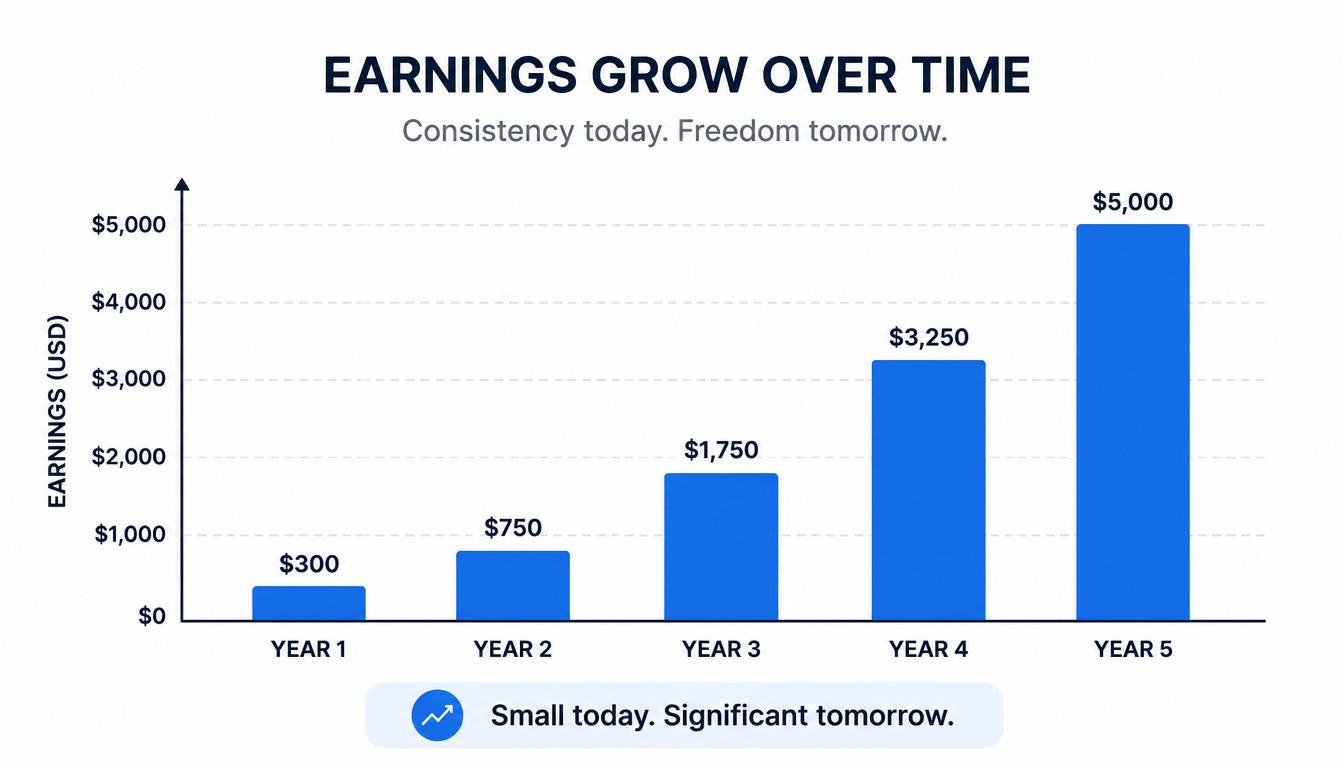
The most important thing to understand is that these sources are compound. One stream leads to another. The money from dividends gets reinvested. The revenue from a digital product funds the next one. Over five to ten years, someone who starts building today with modest resources can reach a position where their non-work earnings cover a meaningful portion of their monthly expenses.
That is not a fantasy. It is simply what happens when consistent effort meets time and compounding. Every person who is financially free today built it this way, one source at a time, over years of steady work.
Conclusion
Building sources of money that flow in without your constant presence is one of the most powerful things you can do for your financial future. It takes real effort up front. It takes patience. And it takes consistency over months and years rather than weeks.
But the rewards are real. More breathing room. The freedom to make choices based on what you want, not what you desperately need. And eventually, a level of freedom that active work alone rarely provides.
Pick one option from this article that fits your current situation and your available time. Start building it this week. Even the smallest step taken today puts you ahead of where you were yesterday.
Related Articles
- Side Hustles That Actually Work and Pay Well
- Investment Strategies for Beginners: Best Real Estate and Retirement Plans
- Financial Goals Planning That Actually Gets Results
Frequently Asked Questions
Passive income is money earned with little or no ongoing daily effort, usually from assets or systems built up front. Examples include rental income, dividends, digital product sales, and interest from savings.
You build it by investing money into assets like shares or property, creating digital products, or building platforms like blogs or YouTube channels that generate advertising or affiliate revenue over time.
Tax rules vary by country and type of earnings. Rental payments are usually taxed as regular income. Dividends often have a lower rate or allowance. Digital product earnings are typically treated as business income. Consult a local accountant for your specific situation.
At a conservative 6 to 8 percent annual return, one million rupees generates roughly 60,000 to 80,000 rupees per year. In dollars, one million at the same rate produces 60,000 to 80,000 dollars annually before tax.
Rental properties, dividend-paying shares, index funds, digital products, online courses, savings accounts, and content platforms like blogs or YouTube channels are all proven generators of non-active earnings.






- Be Respectful
- Stay Relevant
- Stay Positive
- True Feedback
- Encourage Discussion
- Avoid Spamming
- No Fake News
- Don't Copy-Paste
- No Personal Attacks
- Be Respectful
- Stay Relevant
- Stay Positive
- True Feedback
- Encourage Discussion
- Avoid Spamming
- No Fake News
- Don't Copy-Paste
- No Personal Attacks
